

Remember the last thing a fascist regime wants is people to make more art because art makes people think. It’s ok to use your art as an act of protest.
#writingadvice
-Dark/Paranormal/Fantasy/Horror AUTHOR -Human/Hyrax Hybrid -Dark Empress of Delayed Reactions
Remember the last thing a fascist regime wants is people to make more art because art makes people think. It’s ok to use your art as an act of protest.
#writingadvice
So here I sit at the desk of my day job wondering how I got into this situation. After looking at my clock three seperate times, I misread it thinking I was late for work. So here I sit- thirty minutes early to my shift… waiting.
Why the hell is that so important? Because time is relative. I knew getting to my shift on time was a major item in my day and I made getting to it a priority. In fact, it became such a priority that my brain sped up my perception of time.
Tomorrow is October 31st, 2017. Halloween. It is also another important day. NaNoWriMo Eve.
So this is my quick pep talk to you (and let’s be honest- myself as well), to make your writing a priority this November.
I took a year off of my book to build a buisness. Now, it is time for it to receive all of my attention. The same goes for the words bubbling under the surface within you. Only you can tell this story. That’s why you have it.
If I don’t write this story, my fans will not experience the story needing to be shared. The final battle between the Chthonics and Olympians is dark and brutal- but if I don’t write it no one will know this story existed.
Make your story a priority this November. Your story deserves it, and above all YOU deserve it.
Also be sure to catch up with my Nano prep series:
So what did I cover?
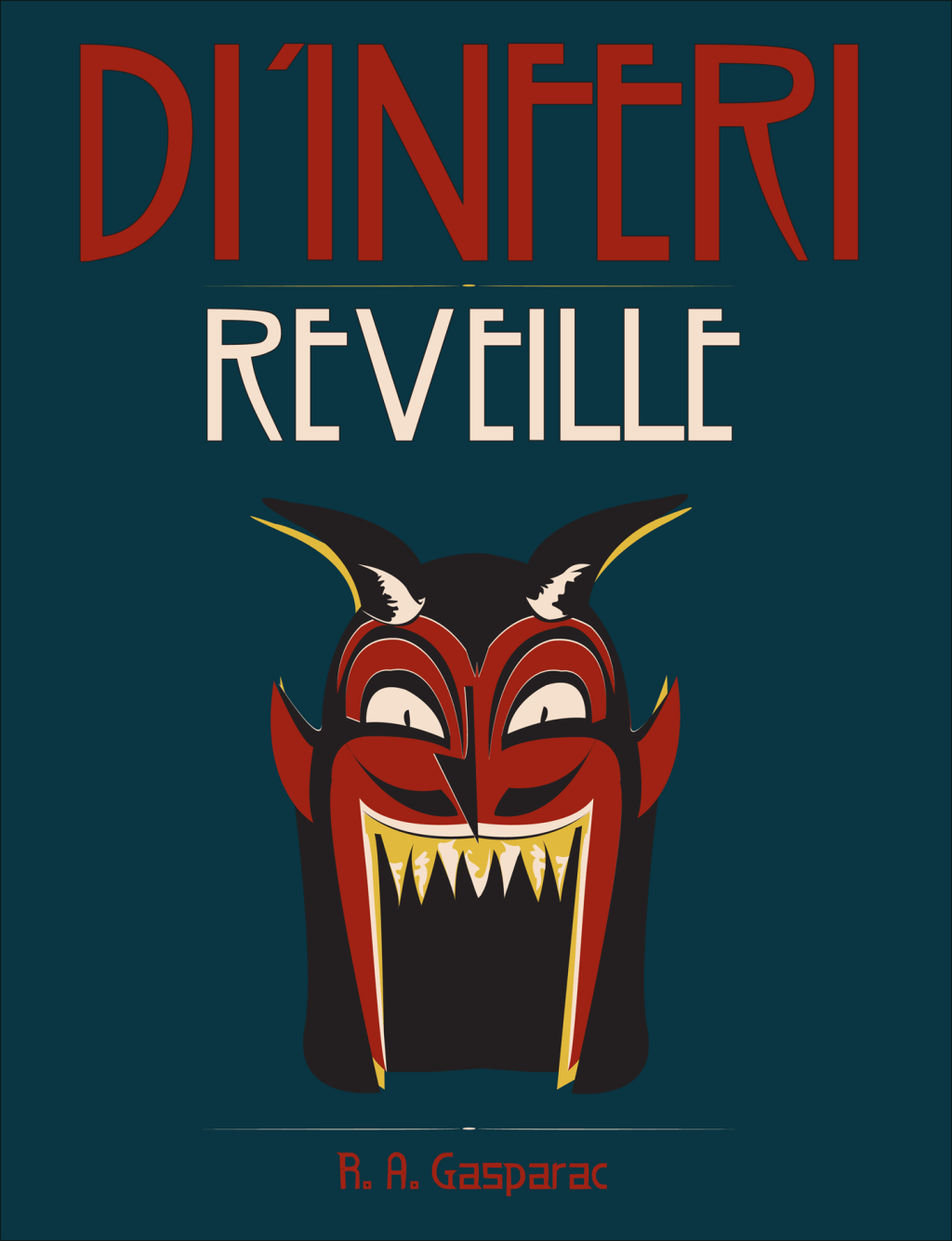
This year, instead of focusing on pages and words counts, I will simply be focusing on rewriting all remaining chapters. Put it on hold for a year and it is time to get this ready for an editor (post beta reader full read through). Hope this book cover makes you ask a few questions (if you were a beta reader you know what is actually on the cover).
Be sure to follow my progress on NaNoWriMo.com, Facebook, Instagram, and Twitter!
Also be sure to catch up with my Nano prep series:
So what did I cover?

Hello Darkness, my old friend….
::excitedly rubs her palms together, and pinches the tip of her handlebar mustache::
Okay, I don’t have a mustache, but I HAD to mention the all time top cliche in villains before we started. It is a easy way for your reader to identify who the bad guy is in your story. I should also say this is by far the LAZIEST way as well. Something happened to our heroes and villains in the last twenty years. The good guys were the bad guys, and the bad guys were the good guys trying to right a wrong. I talked about this in our last post about Anti Heroes and Character Development.
So, what are we going to cover today?
No longer do we live in the world of the bad guy being easy to find. These days readers want a much harder time of guessing who the real villain is. Take for instance The Sookie Stackhouse Novels. For the sake of time, I will just be talking about the first book.
Rene is the best example of this type of villain. Charlaine Harris did a superb job of making her villain such a seemingly good ‘ol boy, that the reader refused to believe until the truth was revealed, and we learned the truth about him. Slowly, throughout the book Charlaine Harris gave us some serious clues that he is the bad guy killing ‘Fang Bangers’, but because he was first painted as SUCH A GOOD GUY, it gave us whiplash when we finally read the chapter in the Cemetery where Sookie has to kill him with a shovel in order to survive. One really good tactic she used was pairing him with Arlene. (By far one of my all time favorite supporting characters, so flawed, and viciously loyal to her friends. It also helps that she is a supermom.)
If you get anything out of my NaNo Prep Series, it is this : THE VILLAIN IS THE HERO OF THIER OWN STORY. All it takes is a slight shift in perspective to see who is the Hero, and who is the Villain.
While many people choose to focus on showing how their Main Character is so good, they forget that their Villain needs to be at least six steps ahead of your hero. The journey in your character arc should be the way in which the Protagonist is gaining on the villain, until the hero messes everything up for them right at the most important moment.
This hero has to devastate the villain that they came so close to getting EVERYTHING THEY EVER WANTED ( Like in Loki’s chase – to be taken seriously, and not live in his brothers shadow any more.) Giving your Antagonist a healthy set of like-able qualities makes it that much more conflicting for your reader. They want the hero to succeed, but they don’t want the villain to loose everything they have worked their lives for. This makes for some SERIOUSLY good reading.
https://www.youtube.com/watch?v=dxf8XwrGZeM
::Looses herself for a few moment staring at Loki::
Sorry, what was I talking about again? Oh yes. Like-able Villains. THAT’S RIGHT... Your Homework today is to think long and hard about your Villain, and what you want the reader to feel for them. Brainstorm ways to crush the readers heart, and cause serious conflict for who they are rooting for.
We re almost at the Finish line of November 1st.(2016) I’ve gone over all of the nitty gritting stuff that needs to be figured out to give you a serious head start. The next few post will be covering more on the theories of storytelling and such. Be sure to check those out as well, as these get your head in the game before midnight hits Halloween night.
Did I miss anything? Be sure to contribute in the comments below!
Miss a post? Want to catch up? Here’s the table of Contents.
Wanna get a head start on your NaNo Prep with an inspirational quick read? Pick up my quick to read guide on how I won my 2014 Nano FIVE DAYS EARLY!
Okay, we’ve gone through Out Plotting, Worldbuilding, and Character Development, now we can get to the ‘Setting’ portion of this NaNoWriMo Prep Series!
What will we cover?
In my previous post about creating Pinterest Mood Boards, I showed you both character and setting inspiration from my time building my novella mood boards. There is a reason those images resonated within you. It’s time to put them to good use. We are going to look at your setting inspiration and take stock of the emotions they invoke, and why.
Think of your story and ask yourself a very important set of questions:
(Am I the only one that is unable to breath after reading “A long time ago in a galaxy far far away…”, and before the music begins with the main title?)
I want you for a moment to contemplate a setting for a vampire feeding on a human. No, really – in your minds eye, what is the first thing you see? The first and easiest choice will always be a dark setting, that highlights the contrast of living and dying. Maybe a dungeon, or cemetery?
Now, ask yourself where is the last place you would expect to read of a vampire feeding on a human? For me, I would say at a baby shower. See how instantly you need to know more details? Do that with your settings. Take the time to really think about the contrast in where your action is happening.
The name of the game for adding more and more conflict, action , and steady pacing in your story is throwing more adversity at your characters. The best ways to do this is to limit your characters choices. You have to use your environment to limit it.
It is expected for a mother to feed her baby while completing household chores. What if we switched things up? New mother is trying to balance her role as a happy housewife while completing a laundry list of chores after she completes her mission to assassinate the president of the United States WHILE Breastfeeding (mother of the year award goes to…). THAT’S a story someone needs more information on. (…and talk about multi-tasking.)
Think about the Avengers Film Franchise. A bunch of superheroes save the world, and traditionally you expect to see the fanfare of the people of New York celebrating them. Instead, we are given a victory lap of reality in the form of Shawarma after the credits rolled…
So, did I miss anything you think is important? Feel free to share your tips and ticks in the comments below!
Hello. I hope you noticed that it took us a while to get here. That was completely on purpose. As writers, we want to jump headfirst into plotting and character development, without first looking at the universe we are creating. Now that we have asked ourselves some REALLY hard questions about our characters world, we can finally round out who they are. If you have missed my previous posts in this series, I strongly urge you start with my posts on Worldbuilding, Pinterest mood boards, and basic plotting. If you haven’t picked up your copy of my quick to read guide to how I won the 2014 NaNo five days early, you can get it HERE.
What are we covering in this post?
Contrary to common belief, the knight in shining armor wont cut it anymore in literature. It is a trope that has been beaten to death, and dissected for its flaws in narrative in the world we live in today. When we think of the knight in shining armor, walking into the dragons den, sword at the ready we think of bravery – until we look closer at the common storyline. A knight falls in love with a princess. The princesse’s father, the king orders the knight to go and rescue the delicate and beautiful princess and kill the dragon, bring her home. As a reward he is going to receive the Princess as his new bride, and everybody lives happily ever after. ::SNORES LOUDLY:: This story may have worked in the middle ages, but not in todays world. HOWEVER if we applied this story to modern day, it would probably go a little like this:
In a corrupt columbian village a very wealthy man ( works for a deep secret part of the government) hires a new bodyguard for his fourteen year old daughter after a slew of abduction attempts. As the daughter goes about her days he is there, watching as he slowly falls for her, but does not want to incur daddy’s wrath of making a pass at her. One day after a successful kidnapping, the father instructs the bodyguard to retrieve his daughter.
Bodyguard is all too happy to bring her home safe, the secret love of his life. So he goes and tracks down where the daughter is being held captive – a drug lords mansion. Then he learns “The Dragon” ( heh – what a fitting Drug Lord Name) and the daughter have been in love for some time now, and this isn’t a kidnapping – they eloped.
::insert dramatic Soap Opera music::
I’ll end the story there, so you can think of the MANY different endings that story could have. So, why did I do that? I snuck in a very real flaw for a grown man to have. He was in love with his bosses daughter – who it is implied is WAAAAAAAAAAAYYYYY too young for him. Just that ONE flaw created interest. I kept the same age bracket there would have traditionally been between the two in the original fairytale.
The Anti Hero is SUCH A POWERFUL character to have. One of the most famous renditions of this is the legendary Tony Soprano ( Obviously from HBO’s (AHMAYZING!) Hit, The Soprano’s). Here we have an evil mob boss. We see all the dark and depraved things he does, and we justify it. Why? Because he’s depressed. The family of ducks that he was caring for grew up and flew away. So, because of that one REALLY bad day, we forgave him for everything. Let me rephrase that. A sadistic adulterous, greedy, mob boss’s cute little ducks flew away, so he is allowed to kill people now.
We do this because instead of highlighting only the murderous side of his business, the perspective is switched and you see a loving family man, who is doing his best for his family, feathered or otherwise. Creating a simple shift in perspective for your readers is an instant attention grabber. So, NEVER underestimate making your main character the villain in someone else’s story.
Oh me OH MY. This is a beast of a subject. Thankfully, after talking about Anti Heroes, it is much easier. Here the name of the game is to create conflict within the characters so they have the means to change and grow along thier own character arcs. Picking flaws is actually a lot easier than it seems. It can be as simple as listing all of your characters positive traits, then assinging them the direct opposite in flaws.
Or we can give them all the good characteristics, but none of them are applicable to reaching thier goal. As long as we are doing our best to keep our characters the underdogs of thier arc ( Neville Longbottom in Harry Potter), when they do defeat thier challenge, the reader is moved to cheer.
Know the Generic Character Types
I will start this portion by saying, it is in your best interest to purchase The Writers Guide to Character Traits. It was my first real writers purchase, and it is the holy grail of unlocking your characters psychosis. With that being said, I will take some Types directly from this book, however this is not in any way a comprehensive list. If you want a comprehensive list, buy the book.
Use these templates to give conflicting traits to. I promise it will be worth all of the work. This is the pre writing that makes writing 50 thousand words a piece of cake.
Resources Resources! Resources!
(Besides The Writers Guide to Character Traits by SURPRISE SURPRISE, Writers Digest Books)
Malicious Intent: Writer’s Guide to How Criminals Think (Howdunit Writing) by Mactire, Sean P. published by Writer’s Digest Books
Book In A Month – Writers Digest Books
The Marshall Plan Workbook – Marshall
Master Lists For Writers – Bryn Donovan
How To Write a Novella in 24 Hours – Andrew Mayne
Writers Craft Power Pack – Rayne Hall
9 ingredients to Character Development – Writers Digest
Texas A&M Writing Center on Character Development
NaNoWriMo Character Cafe Forum
Anything else I missed? Be sure to post it in the comments!!!
Pinterest. What a lovely juxtaposition of being one of the most useful tools, by being the most dangerous time trap for a writer. I love this tool. I am a visual person, and I need visual cues to springboard my creativity. However, if left unchecked you could spend HOURS pinning, when you SHOULD be writing.
What are we covering in this post?
Photography is one of those beautiful mediums that invoke such emotion, mood, and tone that it is an indispensable tool to the novelist. What we expand into hours with the written word, images invoke an instant reminder of what we are describing. Here are some screenshots for the WIP I will be working this NaNoWriMo 2016.
For my Lesbian Erotic Adventure, I knew the time period I wanted, and the softness I wanted to imply. Each of these Images are cohesive to my story, and make my brain go off on wonderful tangents ( a.k.a. Plot Bunnies).
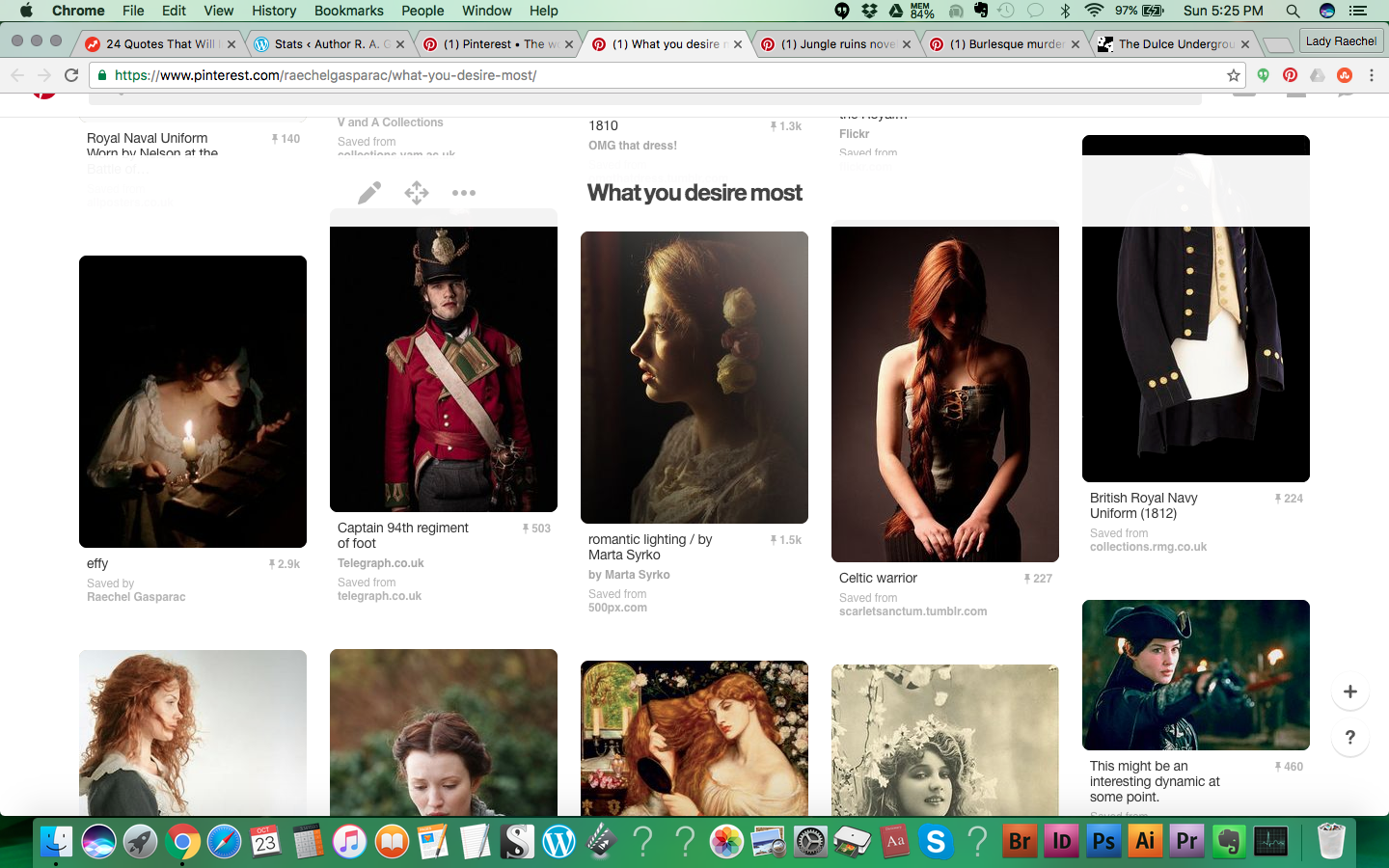
Here I channeled the Maltese Falcon, Mildred Peirce, and Blade Runner in Photographs For the Burlesque Murder Mystery:

Here is a screenshot of my secret Pinterest board for the Adventure Novella:
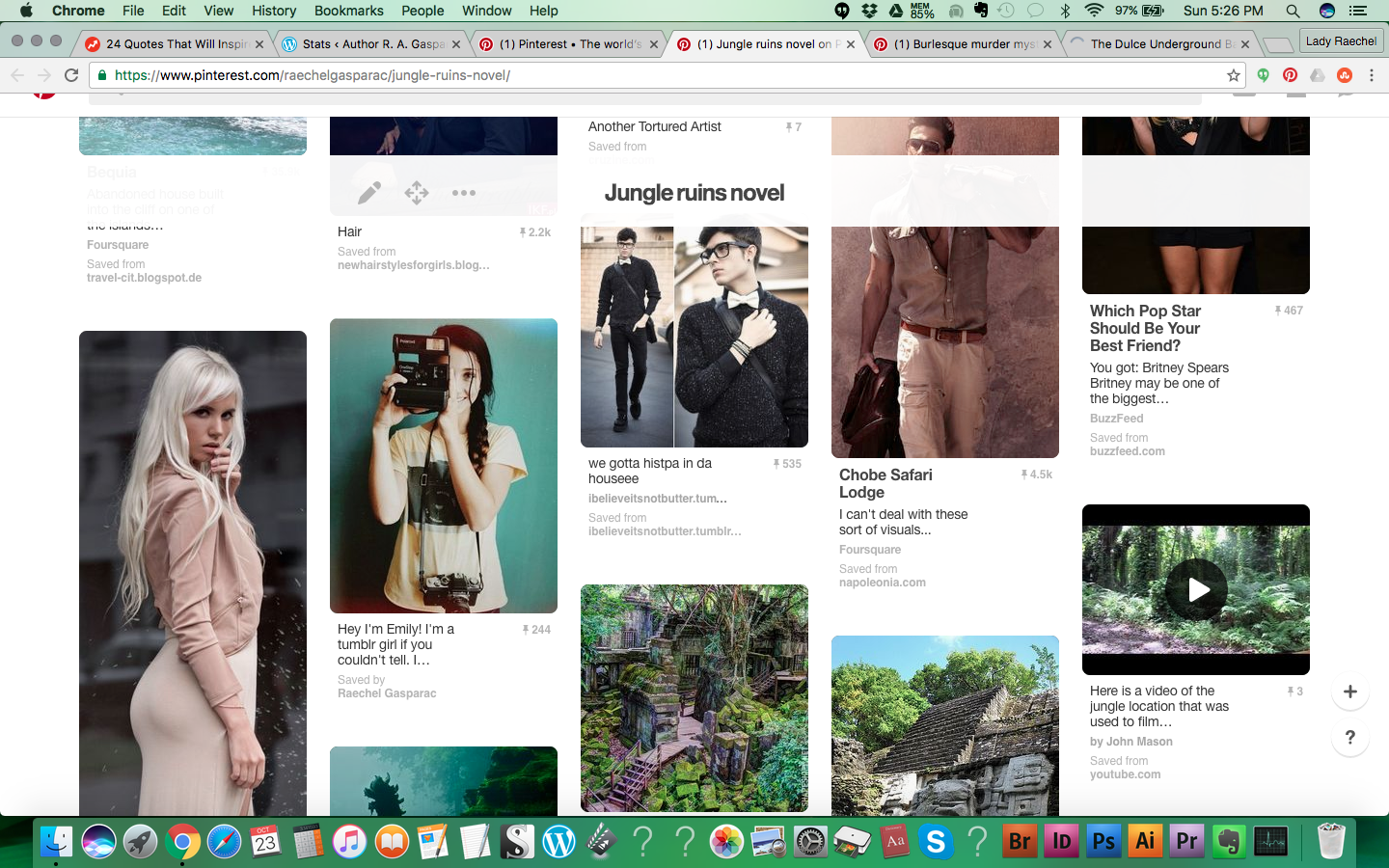
As you can see, there is a mix of characters and setting visual prompts. The gorgeous movie star, her assistant, the rugged male lead, and my fangirl Main Character. I don’t even have to point out who is who. That makes it easier to quickly glance at your board, and fall back in love with the story you are telling. You will also notice I have some pinned video clips in case I need to get a deeper understanding of what I am trying to convey.

This is a perfect example of birthing new plot bunnies to enrich your story. Steal from real life. I knew I had to have an underground military type of base and a graveyard for the bulk of my story. What I didn’t expect to happen, was that while looking for strong visual cues, I found an image that summed up what I had in my head. When I glanced below the picture, I discovered a whole hornets nest of conspiracy theories, that when twisted slightly, could fit as the motivation for this magically inclined evil sleeper government.
Onto ways Pinterest can help, and some tips to keep from falling down the rabbit hole of time wasted.
How it can help:
Tips:
Do you have any other tips or tricks that I haven’t listed? Put it in the comments below! 🙂
If you would like to pick up a copy of my quick to read ebook on how I won NaNoWriMo 2014, you can get it HERE.
Did you miss a previous post in this series? Be sure to Check out my posts on Worldbuilding, and Plotting!
For some reason, as writers we fear the dreaded process of plotting, and creating our story structure. This is odd because this is the core of the stories we love. This should be the most blissful part of the pre writing process. Yet, each and every writer toils over this part simply because of the pressure to weave the perfect story. I am guilty of this, because a broken plot equals a broken story that your reader will either put down before the real conflict starts, or loathe the ending and feel shortchanged.
What we will cover in this Post:
The basis of your work (especially if it is fiction) is your plot. Many writers overthink it. Plotlines can be as simplistic as a bulleted list of things you want to happen throughout the course of your story, or it can be as intricate as weaving a rug on a million thread loom.
There is no denying that the more intricate the plot, the more interest your reader will have, but if you add one too many the reader cannot keep up. The best way to go about it is to add in an A storyline ( Main storyline), and a B storyline (secondary storyline). Any short work will benefit from only these two. However, the longer the story, the more plotlines should be incorporated.
When we talk about longer stories, we need to get out the large 18X24 sheets of drawing paper and make our story grid ( J.K Rowling’s story Grid Method). Why do we need to do this? Because intricate structure (expertly weaved major and minor plotlines) makes for a messy timeline if you aren’t organized. Some authors keep what they call ‘Story Bibles‘ of their WIP ( Work In Progress) to record any important facts about their stories they may have to reference later.
The aim of the game when organizing your plotlines is to mix all plotlines together in a coherent manner, that tells the story while giving each plot point a distinctive time to exist for your reader. It sounds A LOT more complicated than it really is.
This is the nitty-gritty part that writers loathe. We know we have things we want to happen, and we have the great ways we want them to happen, but organizing it all seems to be the biggest hurdle. The real work is organizing every storyline so that it moves the action forward, and prevents the story from stalling out.
For instance we will have ‘Plot A’ be the main story line, ‘Plot B’ be the Romantic storyline, and ‘Plot C’ be comedic relief. The main story will be the strongest action points in your plotline, ‘Plot B’ will be a fantastic vehicle to make readers care about your characters, and ‘Plot C’ will temporary lighten the mood after a supporting character dies, or a very heavy fighting scene. ‘Plot C’ is very important, because as human beings we can only take so much action/death (George R. R. Martin is GREAT at this with Game of Thrones). Just as if we were in a gym running on the treadmill, we have to eventually get off, and let our muscles rest in order to get stronger.
The same goes for your reader. The fantastic part about reading and being absorbed in a story is that your brain is unaware that you aren’t the person going through the trials and tribulations. As your brain reads and feels the words on that page, the brain acts as if it is experiencing it, rather than your characters. So give your reader the equivalent of an emotional smoke break so they do not become too exhausted to read further.
Favorite References
Websites:
Books:
There is no easy way to say this, but you have to do the hard work first before you can get to the fun part that is writing. This is usually the point where those who don’t have what it takes, give up. If you can get through this part, you can EASILY write 50k. Thoughts? Comments? Concerns? Tips? Write them in the Comments below!!!
Hey, did you miss my post on worldbuilding? Click HERE to catch up!


You must be logged in to post a comment.